
ETA-11/0024 - when you need the approval
The ETA number on a product page looks like a formality until the inspector asks for documents at handover. That is when it turns out that “structural screw” and “screw with documented performance” are two different things - and the difference cannot be made up afterwards.
What it actually is
ETA stands for European Technical Assessment - still often called an “approval” in everyday speech, after the document it replaced. It is issued at the manufacturer’s request - a voluntary route - for a product that is not covered, or not fully covered, by a harmonised standard. For a timber fastener it contains what the catalogue leaves out:
- characteristic load capacities - withdrawal, shear, head pull-through,
- minimum spacings between fasteners,
- edge and end distances,
- conditions of use - service classes, timber species, diameter and length range.
ETA-11/0024 is the number of the European Technical Assessment covering Eurotec screws for timber construction; the current issue is dated 28 August 2025. One number covers many families and sizes: its presence means the product falls within the document’s scope and has its own parameters there, not that all values are the same.
When you need an ETA or a DoP
- A load-bearing joint subject to handover. The designer needs characteristic values. For Eurotec screws the ETA supplies them - but it is not the only route: a fastener covered by a harmonised standard (e.g. EN 14592) has its performance stated in its Declaration of Performance. Without either document there is nothing to calculate.
- A structure covered by building consent - as-built documentation requires evidence of product performance.
- Strengthening and repairs where the joint carries a calculated load - even if the old structure never had a design.
- Structures somebody signs off professionally - whether the drawings show a hall, a carport or a garden shelter.
Who issues an ETA, and why it is not a “certificate”
The word “certificate” comes up more often in sales talk than in documents, and much of the confusion starts there.
An ETA is issued by a Technical Assessment Body designated by a member state, at the manufacturer’s request and for a specific product. It is not a quality award - it is a description of properties measured by an agreed method. A product with an ETA is not “better”; it is described in numbers you are allowed to put into a calculation.
The practical consequence: a missing ETA means neither that the screw is weak nor that the joint cannot be calculated. If the product is covered by a harmonised standard, its Declaration of Performance provides the design values. A missing ETA only means that this one route is absent - and that you need to check whether another one exists.
What decides whether an ETA matters
Not the name of the structure. A garden shelter under snow carries load just as a carport does, and a batten under heavy facade cladding works differently from a decorative strip. What decides is the design and the function of the joint: whether it carries a load somebody has calculated, and whether the design requires documented values for it.
If the joint carries no design loads and nobody requires documents for it - temporary formwork, for example - an ETA changes nothing there. You then choose the fastener for other reasons: geometry, coating, length.
An ETA gets used as a sales argument where it changes nothing - and ignored where a shelter or deck has calculated joints.
What happens when documents are missing at handover
The real cost is not a fine.
- The designer has nothing to sign. Without characteristic values there is no way to show the joint carries the calculated load - and that is their professional liability, not a formality.
- As-built documentation stays incomplete. That usually ends in a request for supplementary evidence, meaning a halted handover.
- Replacing fasteners is disproportionately expensive. Dismantling a joint already carrying load can mean partial demolition.
So the decision about a fastener with documented performance is made before installation, not after the inspector calls. If you are unsure whether your joint requires it, describe it to us - we answer even when the answer is “you do not need it”.
ETAs and service classes
Product documentation also says under what conditions a fastener may be used - ETA-11/0024, for example, stipulates that the corrosion protection of carbon steel screws must suit the service class and the expected working life. That limit gets overlooked because it does not look like a number.
EN 1995-1-1 (Eurocode 5) defines service classes by moisture, not by the name of the structure:
- Service class 1 - a moisture content corresponding to a temperature of 20°C and a relative humidity of the surrounding air exceeding 65% for only a few weeks per year. Example: a heated interior.
- Service class 2 - as above, but with an 85% threshold. Example: a covered, unheated structure that water does not reach.
- Service class 3 - conditions leading to higher moisture content than class 2. Example: a member that gets wet.
Examples are only examples. A facade sheltered well enough that the timber stays dry can work in class 2; in a roofed carport where rain drives onto the posts, some members can be in class 3. The designer assigns the class to the member. A fastener intended for classes 1 and 2 is not suitable for class 3, however ample its capacity - and confusing the two costs most once corrosion starts where nobody can see it.
Three documents that are easy to confuse
| Document | What it says |
|---|---|
| ETA | Technical assessment of the product: numbers for calculation and conditions of use. Issued by a Technical Assessment Body at the manufacturer’s request. |
| Declaration of Performance (DoP) | The manufacturer’s statement of the performance of a product type, declared on the basis of an ETA or a harmonised standard. It is the basis for CE marking. |
| CE marking | The mark affixed by the manufacturer. Under Regulation 305/2011 (Art. 9(2)) it must be accompanied by, among other things, the DoP reference number, the reference to the ETA or standard and the declared performance - but the mark replaces neither the DoP nor design values. |
The designer calculates from the ETA - or, for a product covered by a harmonised standard, from the values declared in the DoP. At handover the inspector usually asks for the DoP, because that ties the product type to its declared performance. Packaging marking and delivery documents show that the delivered screw is that type. “CE” on a box replaces none of these documents.
What “ETA/CE certificate” does not replace
A statement that a product “has an ETA/CE certificate” gives the designer no number at all. Where the ETA is the basis of the declaration, calculation needs the ETA number and access to the document; under a harmonised standard, the standard and the DoP.
Watch out too for “compliant with ETA-11/0024” on a product whose trade name does not appear in that document. Compliance declared by a seller is not the same as the product being covered by the assessment - and at handover it is the second that counts.
How to check whether a product and size are in the ETA
The number on the product page is where checking starts. With ETA-11/0024 it takes minutes:
- Date of issue. It is on the first page and in the footer of every page. The document is reissued and its scope changes; the present issue is dated 28 August 2025.
- Trade name. The first page and section 1 of the specific part list the trade names the assessment covers. If the product name is missing, the assessment does not cover it, however similar it looks.
- Size and material. The overall range of ETA-11/0024 is screws of 3.5-13 mm diameter in carbon steel and 3.5-10 mm in stainless steel, 25-1000 mm long (16 mm refers to BRUTUS threaded rods); the dimensions of individual families are in Annex A. Carbon and stainless steel screws have different diameter ranges.
- The material you drive into. Parameters are separate for softwood, softwood LVL, beech LVL or cross-laminated timber - and separate for pre-drilled and non-pre-drilled holes. The guide to screws for beech LVL works through an example.
If you are looking for a fastener for a load-bearing joint, start from which thread should do the job - that settles things earlier than the document number does.
Our products with ETA-11/0024
The number is stated in the specification table on the product page. At present it appears there for, among others:
- KonstruX full thread - a structural screw for load-bearing joints,
- Topduo cylinder head - for above-rafter insulation,
- Hapatec silver and Hapatec black - decking screws for hardwood.
The list refers to our range, not to the scope of the document. ETA-11/0024 itself covers many more families - it names LBS, Paneltwistec and Hobotec among others - and its scope changes from issue to issue, so check it in the current version. What governs is the number in the specification on the product page and the document itself, not this guide - if you ever see a discrepancy, let us know.
How to read values from an ETA
An ETA does not give one number per screw. It gives functions depending on several variables at once - which is why we do not copy tables into guides.
- Species and density. The same screw carries differently in spruce and in beech.
- Penetration depth of the threaded part in the receiving member - not the overall length.
- Driving angle to the grain. Angled transfers load differently from perpendicular.
- Spacing and edge distances. More fasteners do not multiply capacity linearly - set too close, they split the timber.
So the numbers are read from the document for the specific case; a table copied without context is worse than none, because it looks like a finished answer. Need help? Give us the species, sections and angle, and we will work through it together.
Where to get the document
For products covered by an ETA we state the number directly in the specification, and the files can be downloaded from the product page without an account. Check the date of issue on the ETA file you download. The manufacturer issues the Declaration of Performance for the product type, not for a batch - if you need it, write to us with the article number.
In short
An ETA provides numbers for calculation, not a mark on a box. The design and the function of the joint decide whether you need one; where there is no ETA, a harmonised standard and a DoP can supply the values. CE marking replaces neither the DoP nor design values, and DoP and ETA are two different documents. Check trade name, size and date of issue first. In our range, the number ETA-11/0024 currently appears for KonstruX, Topduo cylinder head and Hapatec silver and black, among others.
Product from this guide
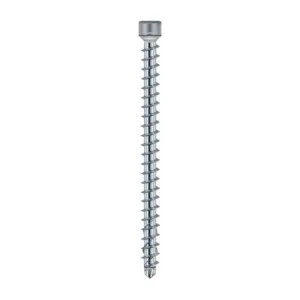 KonstruX Full Thread - Cylinder Head
102,43 zł - 789,03 zł incl. VAT
KonstruX Full Thread - Cylinder Head
102,43 zł - 789,03 zł incl. VAT
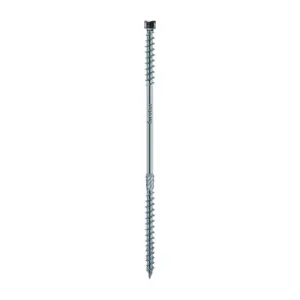 Topduo Cylinder Head - Above-Rafter Insulation
147,00 zł - 974,92 zł incl. VAT
Topduo Cylinder Head - Above-Rafter Insulation
147,00 zł - 974,92 zł incl. VAT
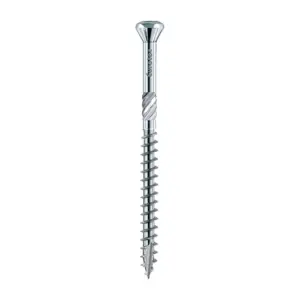 Hapatec stainless - decking screw for hardwood, hardened stainless steel
144,62 zł - 363,69 zł incl. VAT
Hapatec stainless - decking screw for hardwood, hardened stainless steel
144,62 zł - 363,69 zł incl. VAT
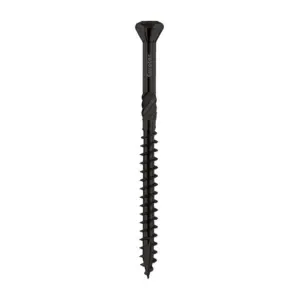 Hapatec black - screw for cladding and decking boards
159,11 zł - 496,38 zł incl. VAT
Hapatec black - screw for cladding and decking boards
159,11 zł - 496,38 zł incl. VAT