Choosing an adjustable pedestal - height, fall, load
The catalogue gives you the adjustment range in millimetres. It will not tell you whether your structure needs a basic pedestal or the one built for heavy slabs - and it certainly will not tell you which adapter fits your substructure. This guide walks through the three numbers that decide it: construction height, fall and load.
Why a pedestal at all
A terrace on pedestals is a ventilated terrace: boards or slabs rest on adjustable supports above the substrate instead of being glued and grouted. That gap gives you three things a bedding layer and adhesive cannot:
- drainage - rain runs off underneath the surface instead of standing in the joint,
- ventilation - timber and substructure dry from both sides,
- access - services, drains and inspection chambers stay reachable without breaking anything up.
And the one that matters most at renovation time: the surface can be lifted and relaid.
You are not choosing a pedestal, you are choosing a range
The most common mistake on a first terrace: measuring at one point and ordering a pedestal “for that height”. The substrate is never level - and an adjustable support exists precisely to absorb that unevenness.
Measure at the lowest and the highest point. If both fall inside one size’s range, take one size and you have the simple case.
If they do not, you may mix sizes within the same series. Where there is fall or a step, this is standard practice rather than a workaround: BASE XL goes where the construction height is greatest and BASE S where it is smallest - with BASE and GIANT the load rating is identical across the series. With PROFI-LINE it is not - PRO XXS carries 4.0 kN against 8.0 kN for the rest, so if you mix sizes in that series, design the whole arrangement to the weakest support. Levelling the substrate and extension rings stay for the cases where even the largest size in the series will not reach.
Do not mix across series under one surface. The series differ in head geometry and load rating - and the calculation follows the weakest element.
Construction height - what exactly you measure
Construction height is the distance from the finished substrate to the underside of the joist or slab - the space the pedestal has to fill. Not to the top of the board.
If you are planning from the finished terrace level - flush with a door threshold, for instance - work backwards: subtract the board or slab thickness and the height of the substructure from your target level. What remains is the range for the pedestal.
Three series, one difference that actually decides
The height ranges overlap heavily. What separates them is load capacity - and that, not the millimetres, is the first question.
| Series | Load | Range | Substructure |
|---|---|---|---|
| BASE | 2.2 kN | 25-210 mm | timber and aluminium |
| PROFI-LINE | 8.0 kN, PRO XXS only 4.0 kN | 10-168 mm | timber and aluminium, slabs |
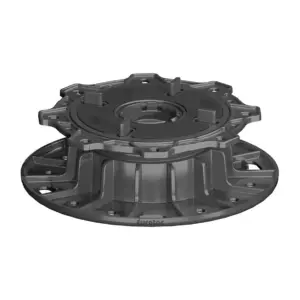
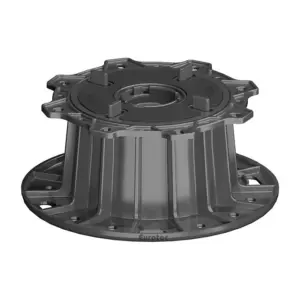
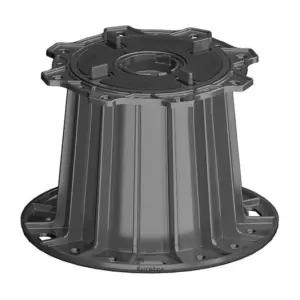
| GIANT | 22.0 kN | 40-220 mm | single-point support for heavy large-format stone and ceramic slabs |
The load figure on the datasheet is a recommended value, not a breaking point. The manufacturer sets it so the pedestal deflects by roughly 2 mm at that load. The load leading to actual failure is several times higher - but you design to the recommended value, not to whatever has not broken yet.
Sizes and ranges
| Size | Range | Load |
|---|---|---|
| PRO XXS | 10-15 mm | 4.0 kN |
| PRO XS / PRO S | 22-30 mm · 30-53 mm | 8.0 kN |
| PRO M | 53-82 mm | 8.0 kN |
| PRO L | 70-117 mm | 8.0 kN |
| PRO XL | 74-168 mm | 8.0 kN |
| SL PRO M | 55-84 mm | 8.0 kN |
| SL PRO L | 73-102 mm | 8.0 kN |
| BASE S | 25-40 mm | 2.2 kN |
| BASE M | 35-60 mm | 2.2 kN |
| BASE L | 60-110 mm | 2.2 kN |
| BASE XL | 110-210 mm | 2.2 kN |
| GIANT S | 40-55 mm | 22.0 kN |
| GIANT M | 55-85 mm | 22.0 kN |
| GIANT L | 80-130 mm | 22.0 kN |
| GIANT XL | 130-220 mm | 22.0 kN |
Adjacent sizes overlap on purpose. BASE M ends at 60 mm, BASE L starts at 60 mm. If your measurement lands exactly on the boundary, take the size where it sits closer to the middle - a pedestal wound out to its limit has no reserve left for later correction.
Fall - and when Nivello does not fit
The substrate nearly always has a fall, and it should, because water has to run off. With boards and a shallow fall, adjusting the pedestals is enough. On a steeper fall the head sits at an angle under the joist too, and with slabs you see it immediately - what needs compensating there is the angle, not just the height.
Nivello 2.0 compensates a fall of 0.5-10 % and brings the slab level.
Nivello fits PRO S, M, L and XL only. It does not fit PRO XXS or PRO XS, and it does not fit the BASE series at all - the manufacturer states this explicitly on the datasheets of both series. If the answer is XXS, XS or the BASE series, you cannot compensate the fall with this part and the substrate has to be levelled instead.
There is a second route that adds no parts at all: SL PRO. The SL PRO M and SL PRO L pedestals have a self-levelling head that takes out substrate slopes up to 8 % on its own. The manufacturer intends them for deck substructures as well as slabs, and points out that no additional components are needed. The build height in the table is reached only with the adapter fitted.
Do not shim the pedestal with offcuts of board or tile. It works until the first winter: a shim behaves differently from the support, works its way out or crumbles - and then the pedestal is standing on nothing.
Adapters - where the wrong part gets ordered most often
The names sound alike and the purposes are not.
| Part | What it is actually for |
|---|---|
| L-adapter | timber substructures as well as aluminium. A PROFI-LINE component - the choice with PRO and SL PRO pedestals |
| BASE L adapter | timber with the BASE series - supplied with the pedestal as standard, nothing to buy |
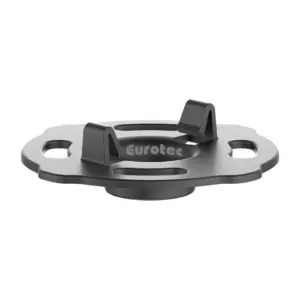
| Click adapter | Eurotec aluminium system profiles only, and only with PRO S to XL. Not suitable for a timber joist |
| Adapter for stone slabs | laying stone and concrete slabs - sets the joint and spreads the load. A PROFI-LINE system component; GIANT is a slab support by design and does not need it |
| BASE adapters 32 · 40 · 60 | aluminium system profiles with the Click connection: 32 → EVO Light, 40 → Eveco, 60 → EVO / EVO Slim and the HKP deck-support profile. These are not heads for timber joists |
If you are building on timber joists: with PROFI-LINE take the L-adapter; with BASE buy nothing at all - the BASE L-adapter ships with the pedestal. Click and BASE 32/40/60 are components of the aluminium system.
Rings and plates - more range, sometimes at a cost
When the largest size in a series will not reach, a ring raises the range.
- The PRO extension ring raises a PROFI-LINE pedestal by +20, +40 or +100 mm.
- The XXS extension plate raises PRO XXS by 5 mm and enlarges the bearing area. The manufacturer allows at most two plates per pedestal.
- The GIANT extension ring raises by 100-170 mm - but the permissible load then drops from 22 kN to 19 kN per pedestal.
That last point is the only place where an accessory changes the design basis. On a domestic terrace the difference is immaterial. Supporting something heavy, you have to go back to the first number and recalculate.
Ground without a foundation
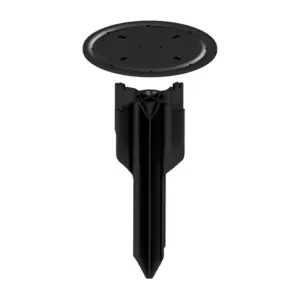
The FLEXI ground anchor acts as a foundation for low terraces: it is driven into loose ground with a hammer, without excavation or concreting, and the pedestal sits on top of it. This reduces the risk of supports sinking into the ground.
Two manufacturer limits, both material. The FLEXI may be used only with PROFI-LINE pedestals. And it has no striking face - it will deform on hard ground, so compacted soil and rubble are out.
Correction after the slabs are down
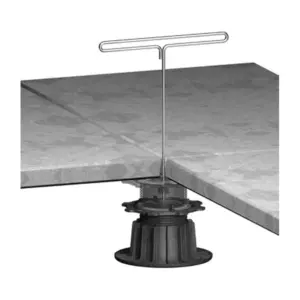
The most underrated tool on the list. The GIANT adjusting wrench reaches between laid slabs and corrects the height of a support without lifting the surface. When one slab starts rocking after a season, that is the difference between ten minutes and a day’s work.
Order of installation
- Corners first. Set and level the corner supports - they define the plane.
- Place the rest at even spacing along the edges, then across the field.
- Adjust by turning the thread, checking level every few supports rather than at the end.
- Post-installation corrections: with GIANT, through the joint with the adjusting wrench. BASE and PROFI-LINE have no such tool - there the level has to be right before the surface goes down.
What to order - specifically
- Measure construction height at the lowest and highest point. If you are planning from the finished terrace level, subtract board thickness and substructure height.
- Decide what will stand on the terrace - that gives the required load, hence the series.
- Pick the size so both measurements sit closer to the middle of the range. Where the height difference is large, mix sizes within one series.
- Choose the adapter by substructure material: timber → L-adapter with PROFI-LINE (with BASE the BASE L-adapter is included), aluminium system profiles → Click or BASE 32/40/60, stone slab on PROFI-LINE → adapter for stone slabs (not needed with GIANT).
- Fall with slabs → Nivello 2.0, with PRO S-XL only. With BASE and with XXS/XS the fall is taken out in the substrate.
- Ground without a foundation → FLEXI anchor, only with PROFI-LINE and only in loose ground.
Not sure which series? We check the selection with our technical adviser, who has 20 years in fastening technology - write to us with the height, the surface type and what the terrace has to carry.
What this guide does not settle
- Support spacing. It depends on the thickness and span of the joist or slab, not on the pedestal. That belongs to the surface design.
- Substrate bearing capacity. The pedestal transfers load into the slab or ground. If the substrate is too weak, the strongest pedestal will not save it.
- Choosing screws for the boards. That is a separate subject - decking screws and the guide on larch decking.
In short
Load first, millimetres second, adapter last. BASE 2.2 kN, PROFI-LINE 8.0 kN - though PRO XXS only 4.0 kN - GIANT 22.0 kN for heavy slabs. Measure at two points, aim for the middle of the range, and mixing sizes within one series is allowed. Choose the adapter by substructure material - timber takes the L-adapter with PRO, and nothing with BASE because BASE L is included. Never Click. Nivello only with PRO S-XL, the FLEXI anchor only with PROFI-LINE, and the GIANT extension ring drops you from 22 kN to 19 kN.
Product from this guide
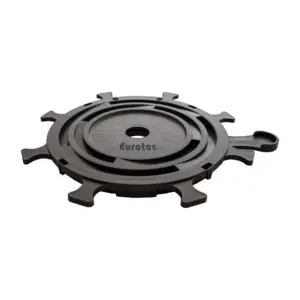 PRO adjustable pedestal XXS
24,16 zł incl. VAT
PRO adjustable pedestal XXS
24,16 zł incl. VAT
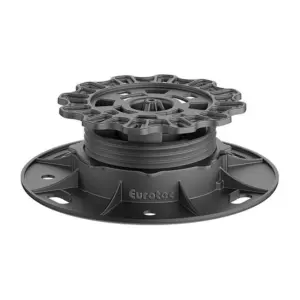 PRO adjustable pedestal XS / PRO S
26,42 zł - 26,85 zł incl. VAT
PRO adjustable pedestal XS / PRO S
26,42 zł - 26,85 zł incl. VAT
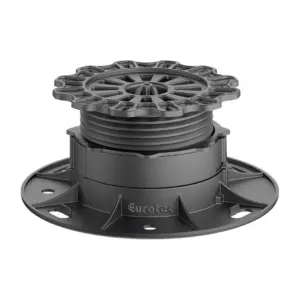 PRO adjustable pedestal M
31,40 zł incl. VAT
PRO adjustable pedestal M
31,40 zł incl. VAT
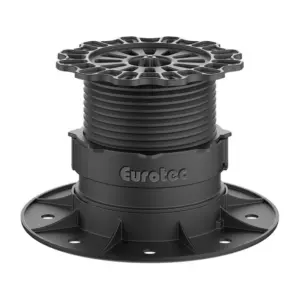 PRO adjustable pedestal L
36,09 zł incl. VAT
PRO adjustable pedestal L
36,09 zł incl. VAT
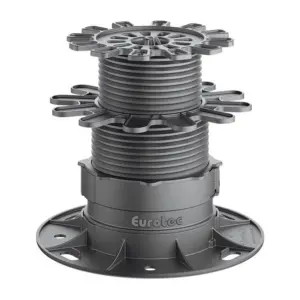 PRO adjustable pedestal XL
42,34 zł incl. VAT
PRO adjustable pedestal XL
42,34 zł incl. VAT
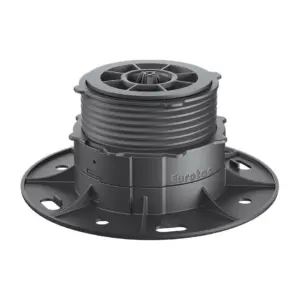 SL PRO adjustable pedestal M
35,81 zł incl. VAT
SL PRO adjustable pedestal M
35,81 zł incl. VAT
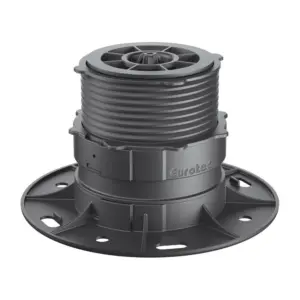 SL PRO adjustable pedestal L
38,78 zł incl. VAT
SL PRO adjustable pedestal L
38,78 zł incl. VAT
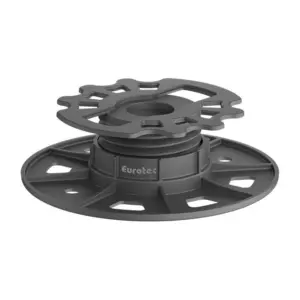 BASE S
14,92 zł incl. VAT
BASE S
14,92 zł incl. VAT
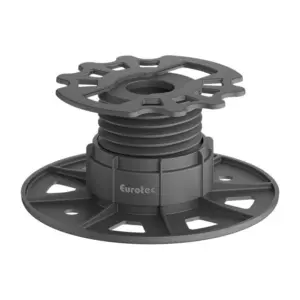 BASE M
18,47 zł incl. VAT
BASE M
18,47 zł incl. VAT
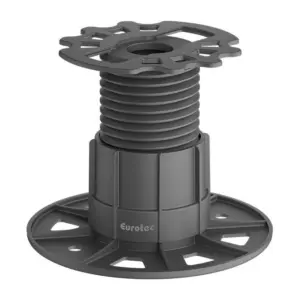 BASE L
22,73 zł incl. VAT
BASE L
22,73 zł incl. VAT
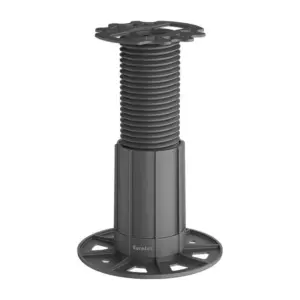 BASE XL
29,84 zł incl. VAT
BASE XL
29,84 zł incl. VAT
 GIANT S adjustable pedestal
23,75 zł incl. VAT
GIANT M adjustable pedestal
26,37 zł incl. VAT
GIANT S adjustable pedestal
23,75 zł incl. VAT
GIANT M adjustable pedestal
26,37 zł incl. VAT
 GIANT L adjustable pedestal
30,12 zł incl. VAT
GIANT L adjustable pedestal
30,12 zł incl. VAT
 GIANT XL adjustable pedestal
35,12 zł incl. VAT
GIANT XL adjustable pedestal
35,12 zł incl. VAT
 Click adapter
3,12 zł incl. VAT
Click adapter
3,12 zł incl. VAT
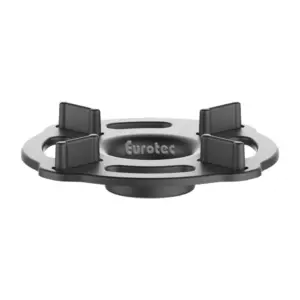 Stone adapter
4,12 zł incl. VAT
Stone adapter
4,12 zł incl. VAT
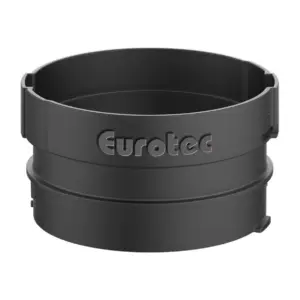 PRO extension ring
8,09 zł - 23,58 zł incl. VAT
PRO extension ring
8,09 zł - 23,58 zł incl. VAT
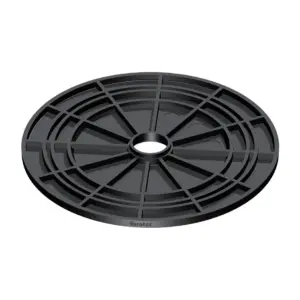 XXS extension plate
6,81 zł incl. VAT
XXS extension plate
6,81 zł incl. VAT
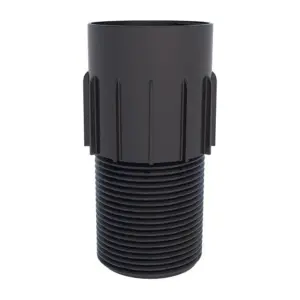 Extension ring GIANT
23,86 zł incl. VAT
Extension ring GIANT
23,86 zł incl. VAT
 FLEXI ground anchor
89,51 zł incl. VAT
FLEXI ground anchor
89,51 zł incl. VAT
 GIANT adjusting wrench
164,68 zł incl. VAT
GIANT adjusting wrench
164,68 zł incl. VAT